From concept to enemy.
How I, a solo developer in Istanbul, and a team of AI agents built three new enemies for the Iron Curtain Call demo in a single day, 14 October 2026: the first blockouts, the concepts, the models and the enemies in the game. Every file on this page is the real one from the game's repository.
Free to use in coverage of Iron Curtain Call, credited to Whale Development Studios (that is me, Ekin Arca). Questions: contact@whaledevstudios.com
The first blockouts.
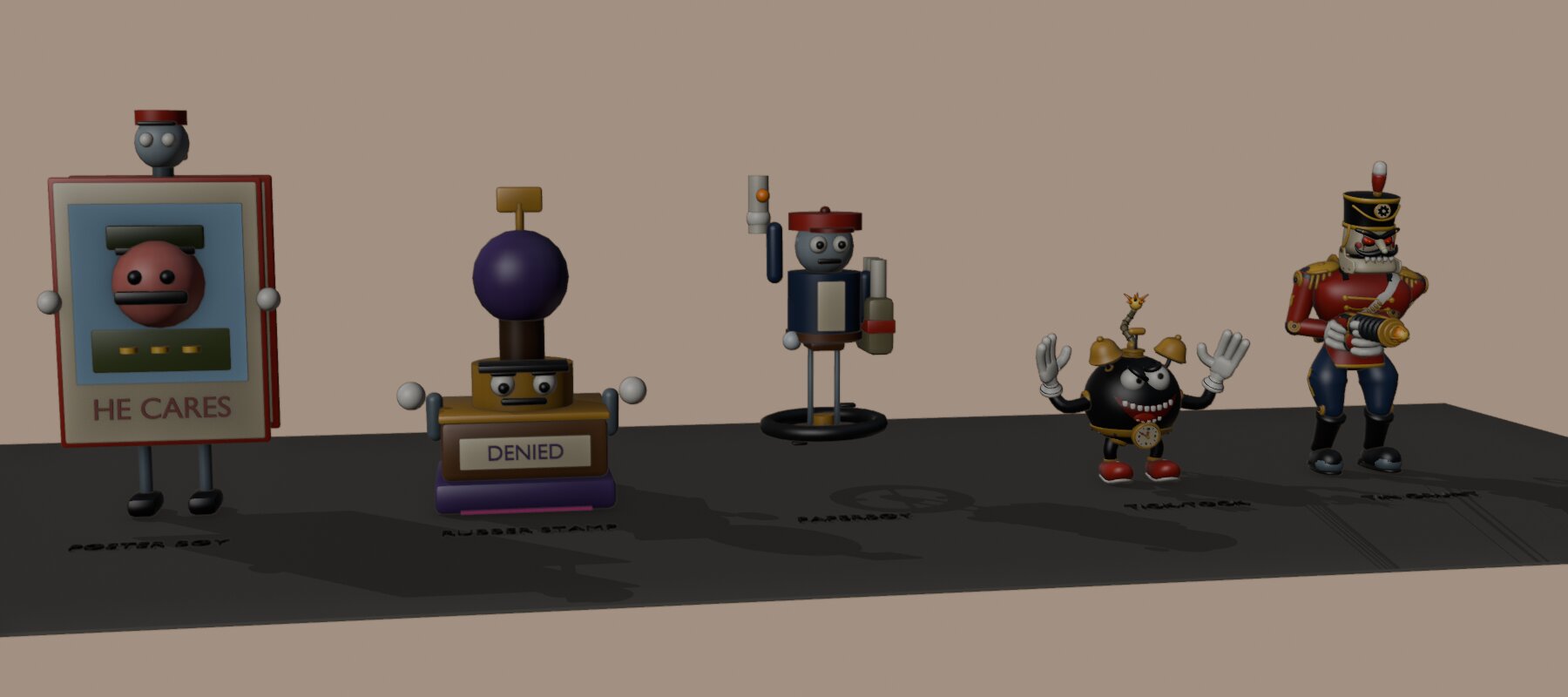
Fine as concepts, but the modelling is weak. Make concept art in Higgsfield and follow it.
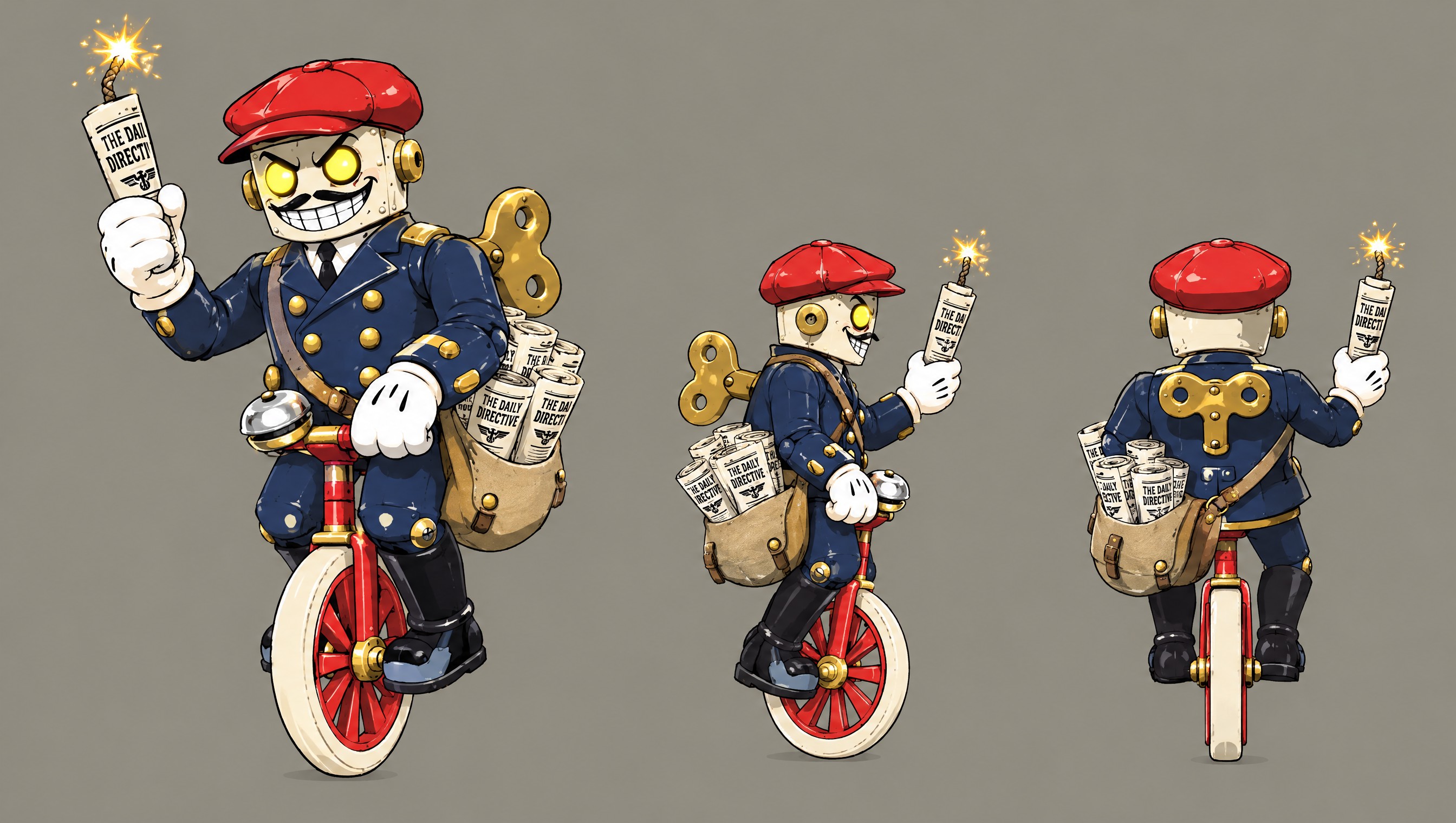
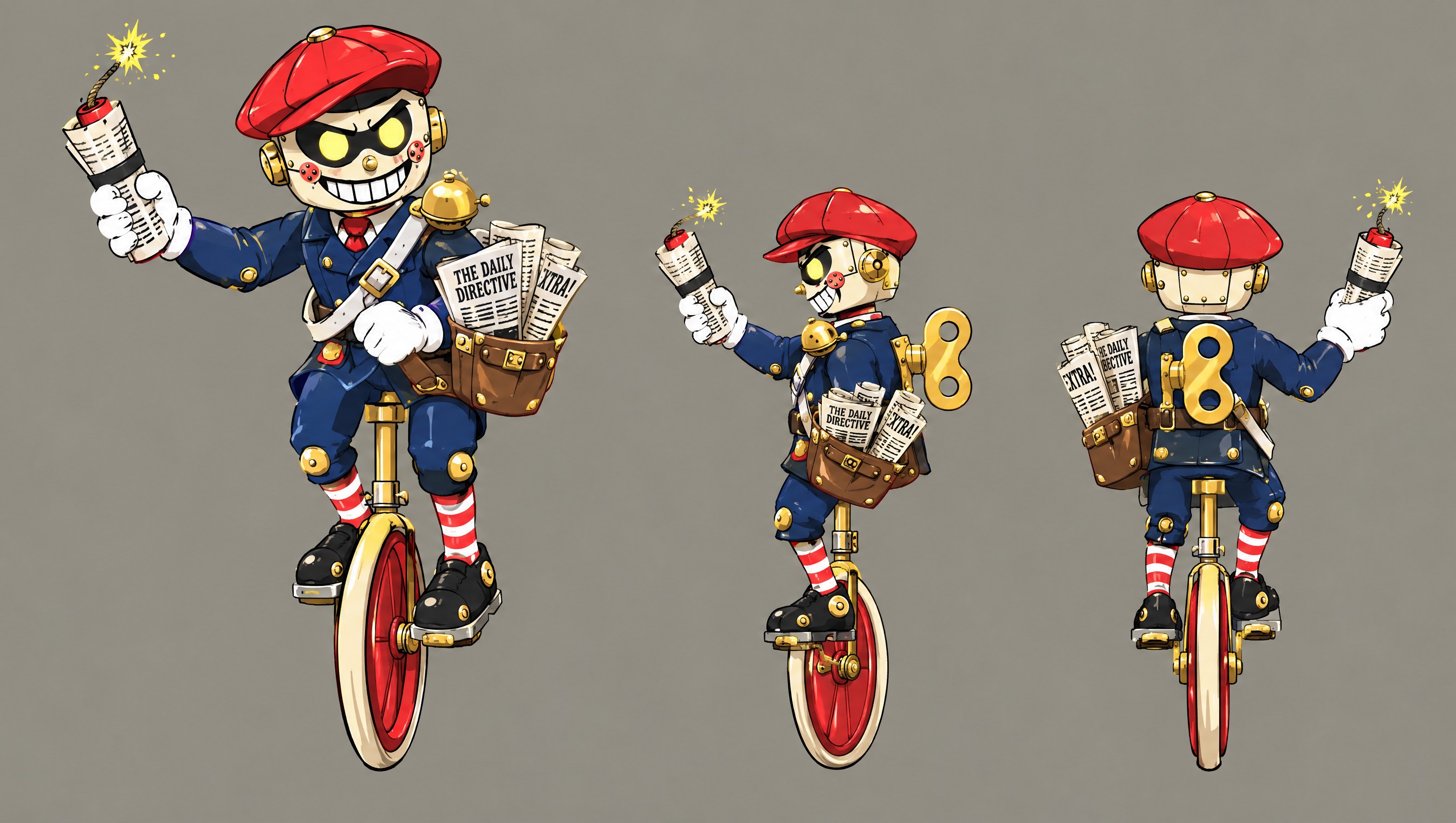
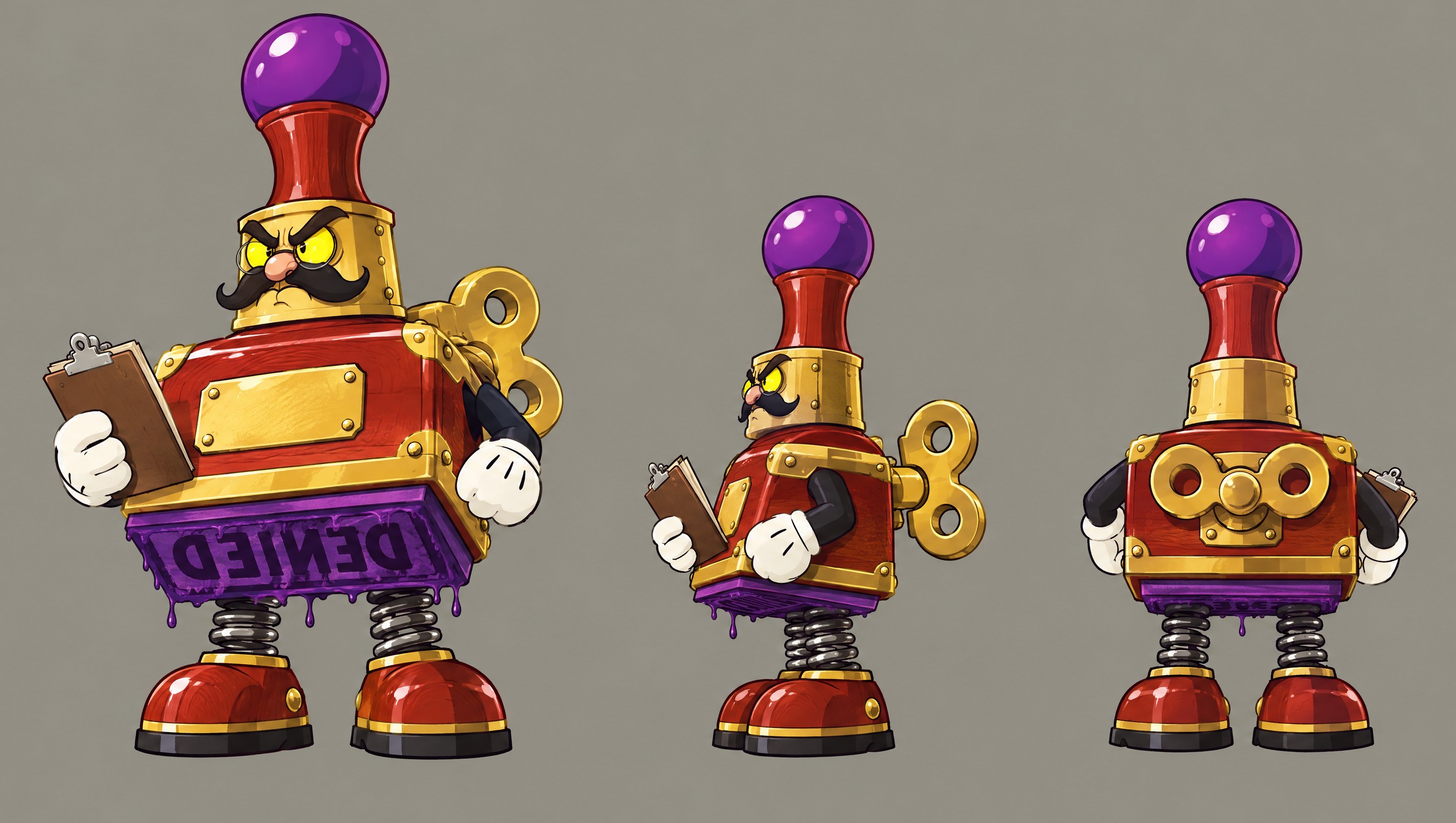
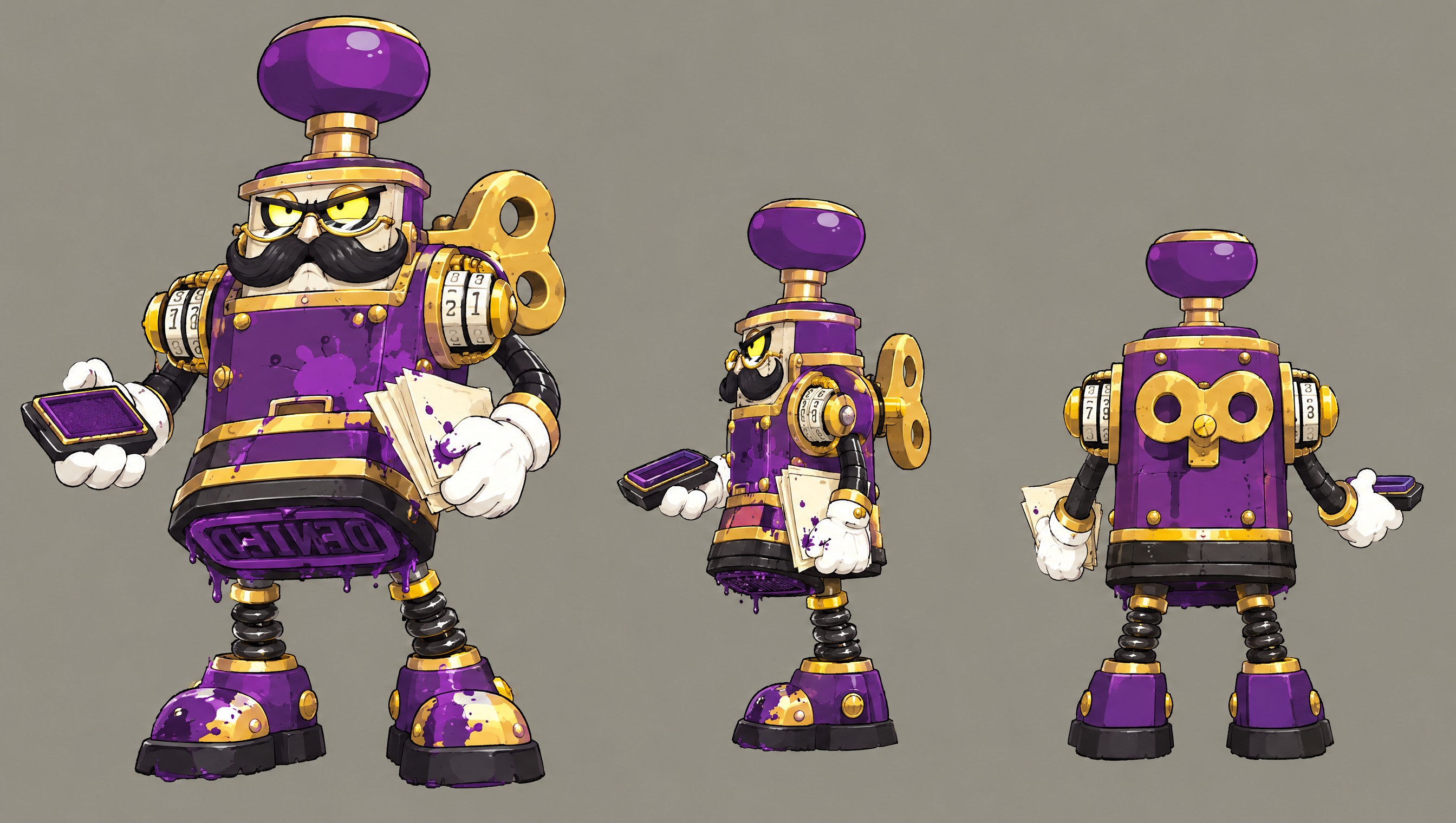
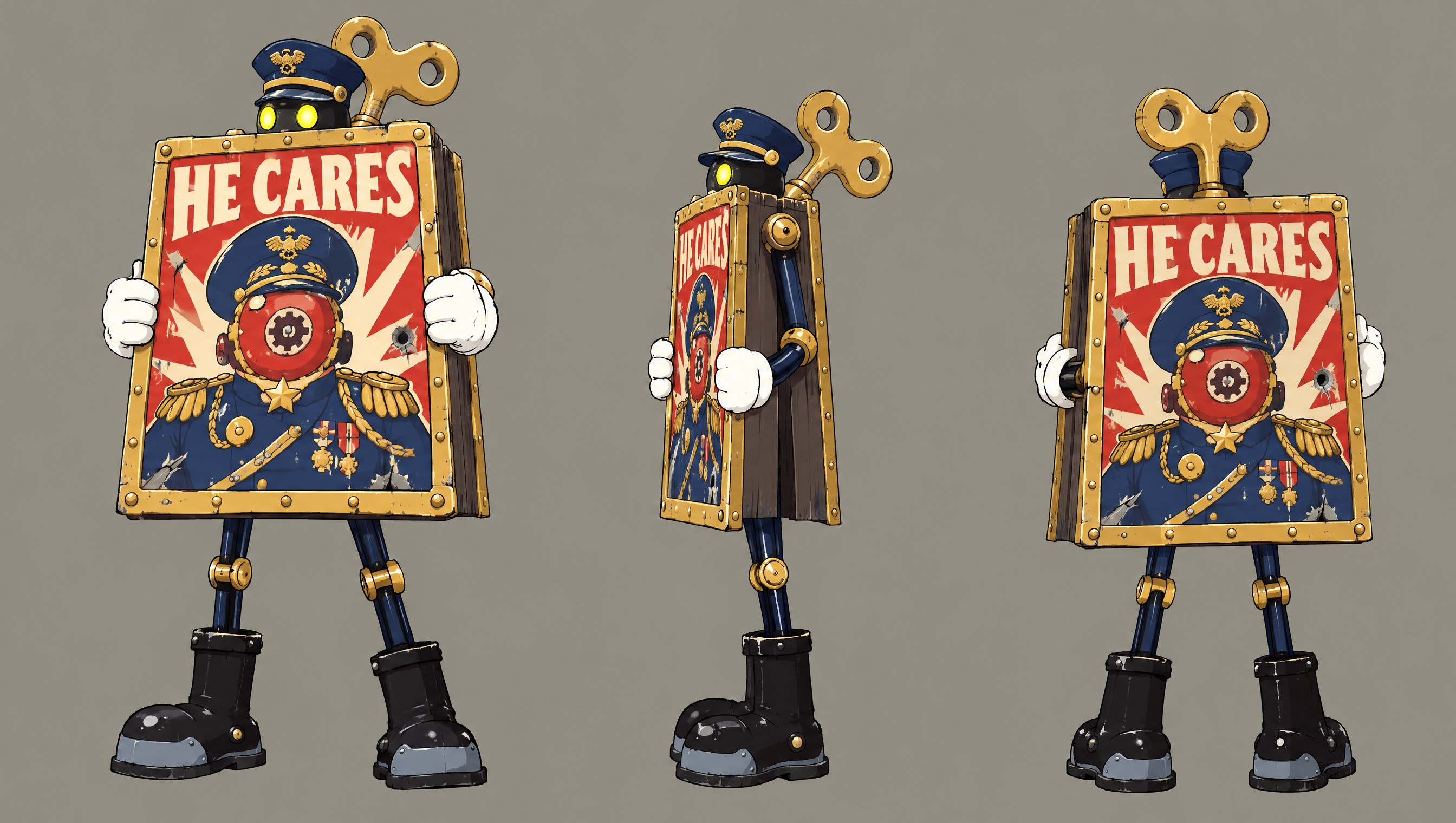
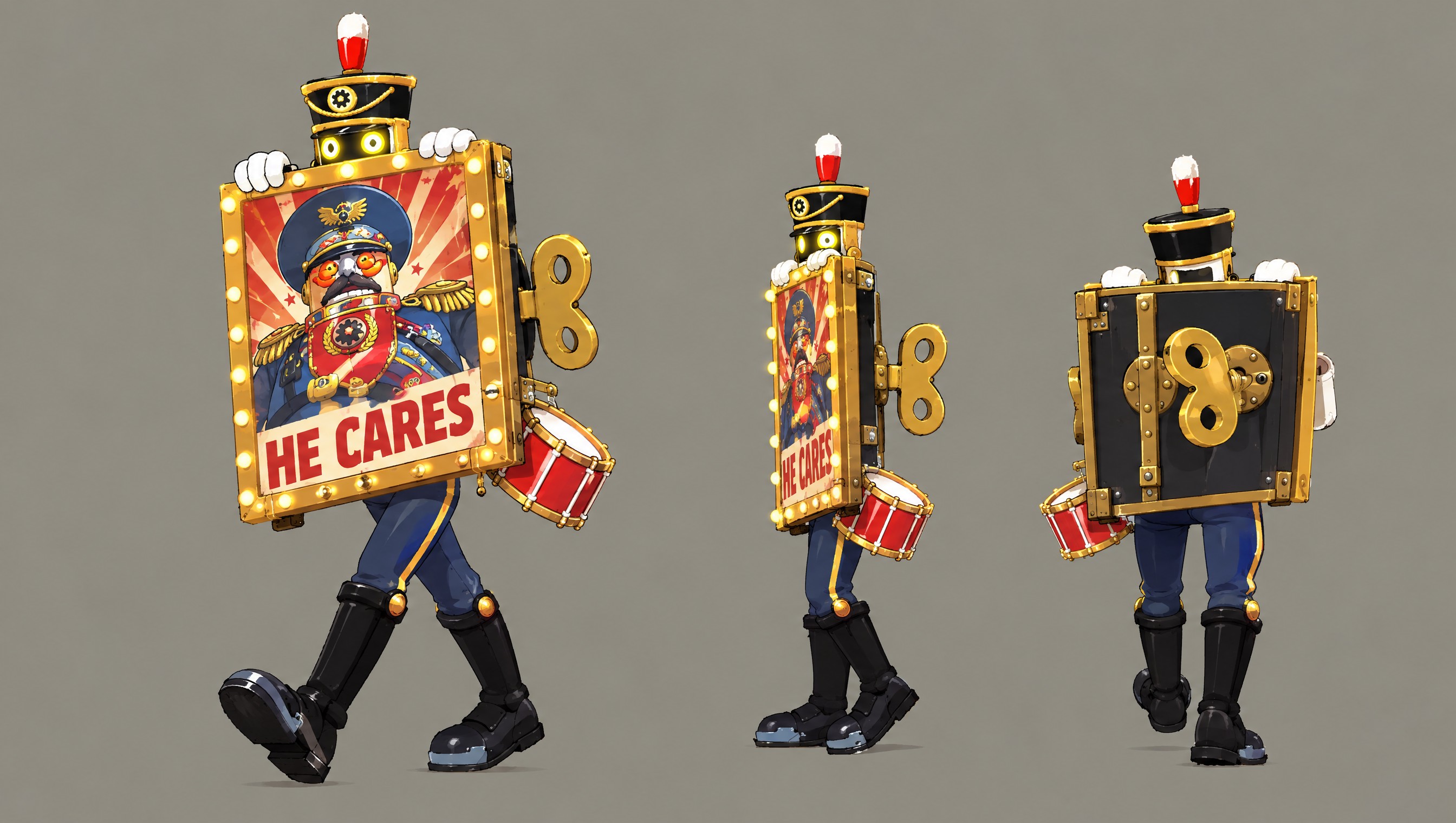
Two concepts each, made in Higgsfield.
The agents made two concepts for every enemy, with in game renders of the finished robots as the style reference, and proposed which parts to take from which. I approved the picks.
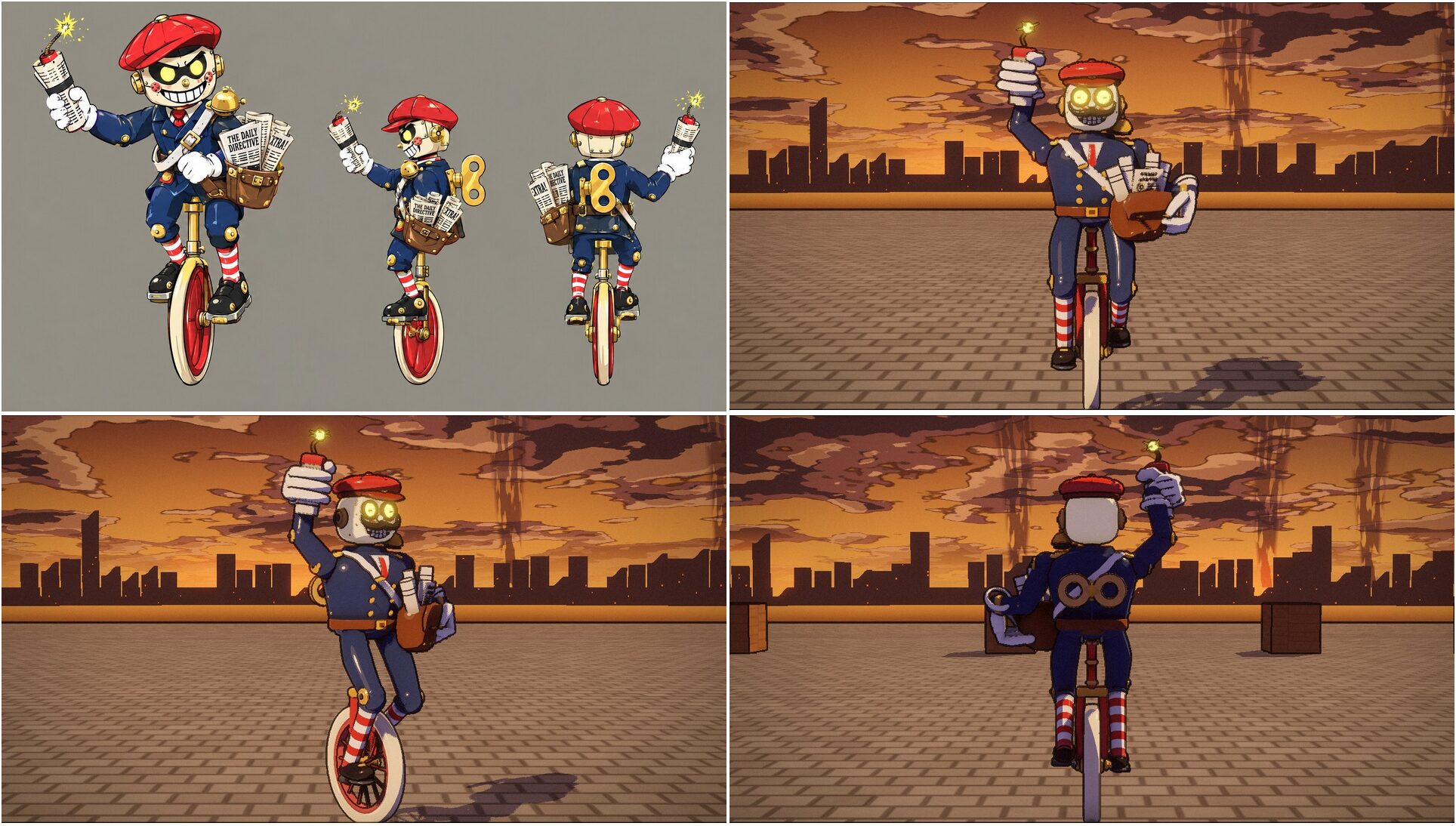
The Paperboy
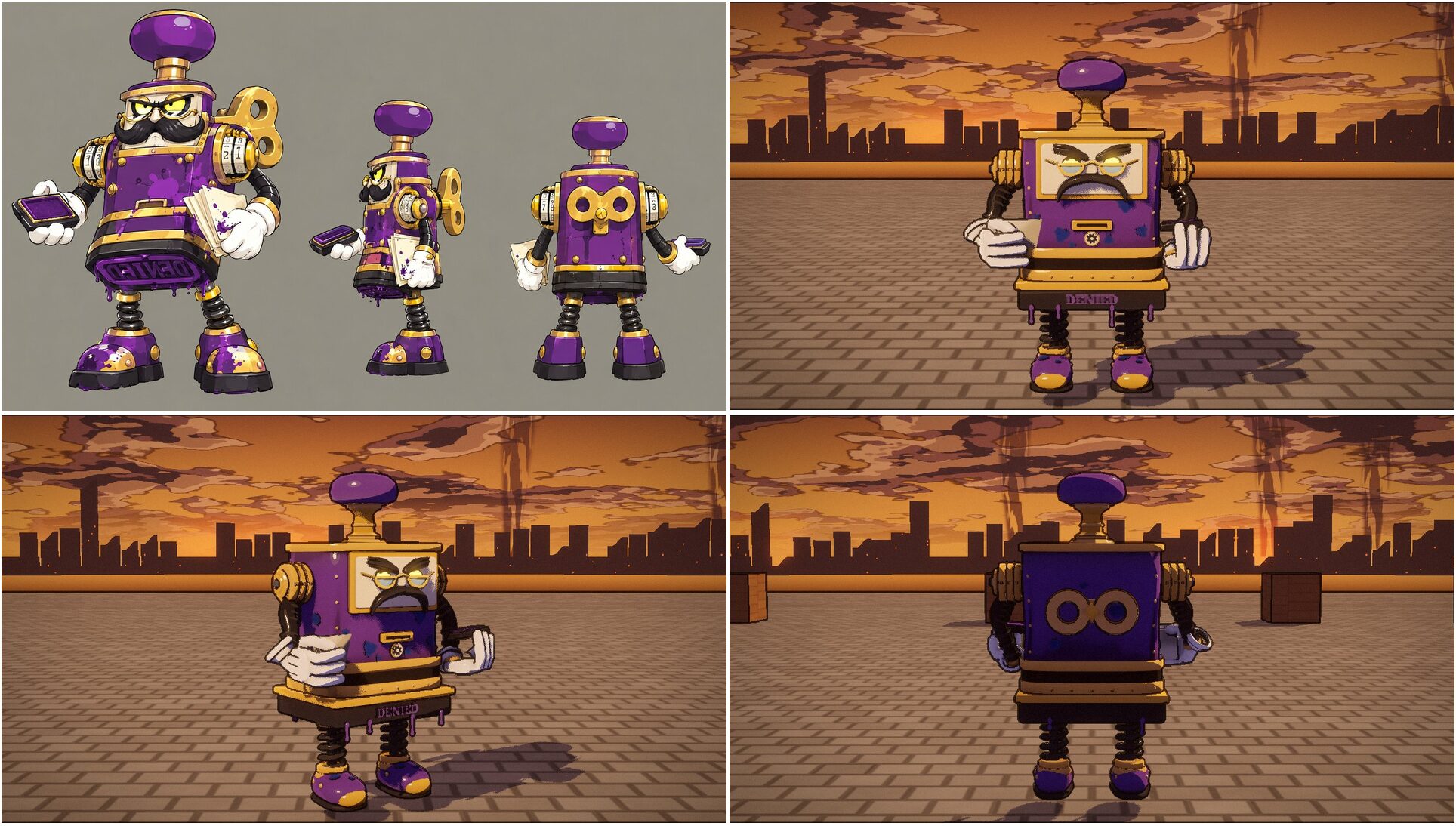
The Rubber Stamp
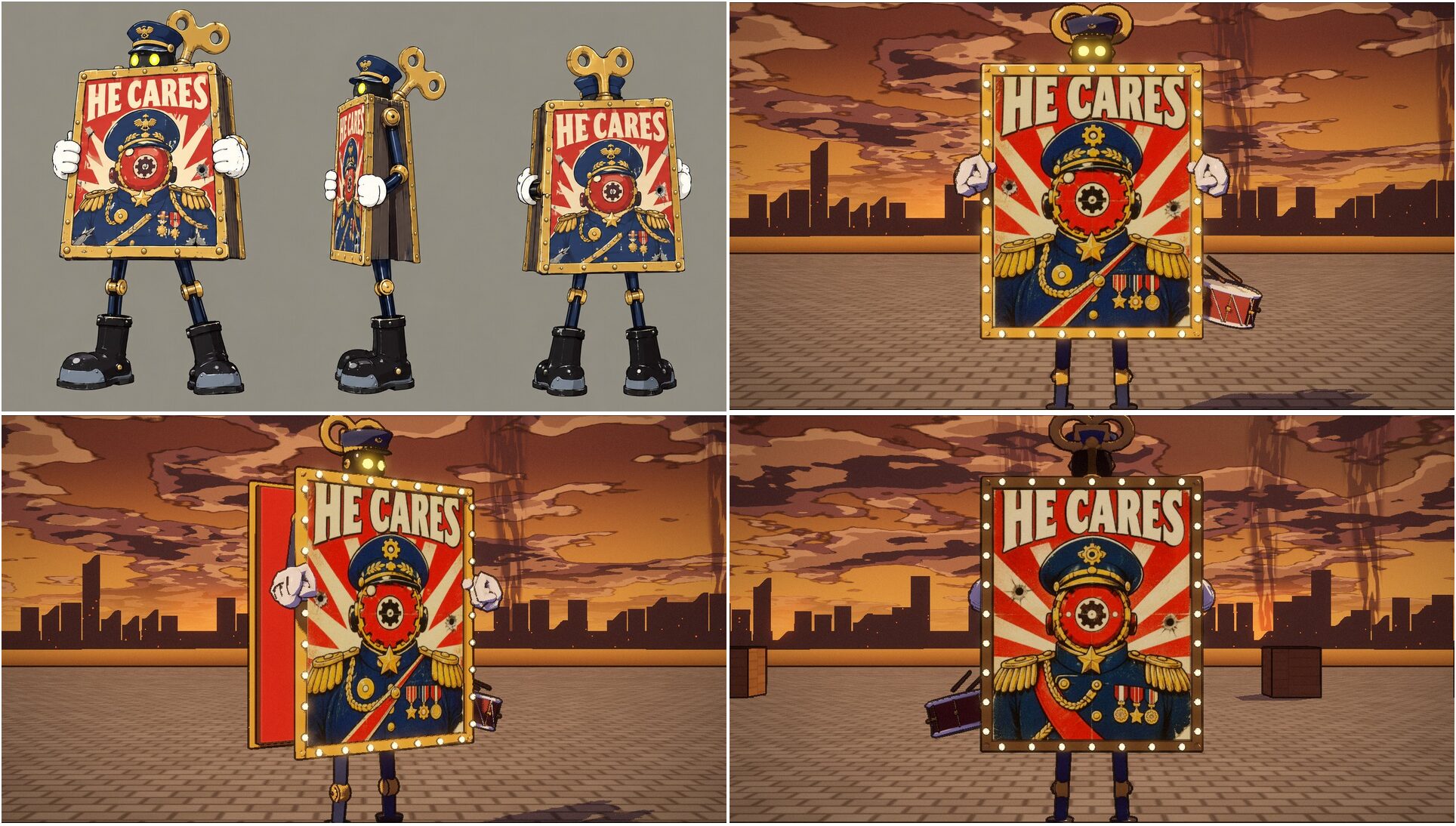
The Poster Boy
The models, next to their concepts.
The agents modelled each enemy in Blender, as a Python script that builds every mesh, then checked the result in the game's own toon renderer against the concept: top left the concept, the other three the finished model in the game.
The day, in 26 seconds.
Every frame in these two films is the game's own footage, my first blockouts, the Higgsfield concepts already on this page, and the end card.
One person, many AI agents.
- Concept. The agents make concept art in Higgsfield, vote among themselves and bring me the best three. I pick.
- Model. The agents model it in Blender, first roughly through Blender MCP, then as a Python script that builds every mesh. The game's 807 models come from 310 such scripts.
- Animation. The references are videos I made in Higgsfield of my characters moving the way I wanted.
- In game. Godot swaps the flat palette colours for a toon shader, and a full screen pass draws the ink outlines.
- Play. I play every build and send back what is wrong. The pipeline runs on its own except where a human has to decide: which concept to take, whether a model is good enough, whether a level is fun.